
Best Cow Breeds for Milk Production in India's Hot Climate
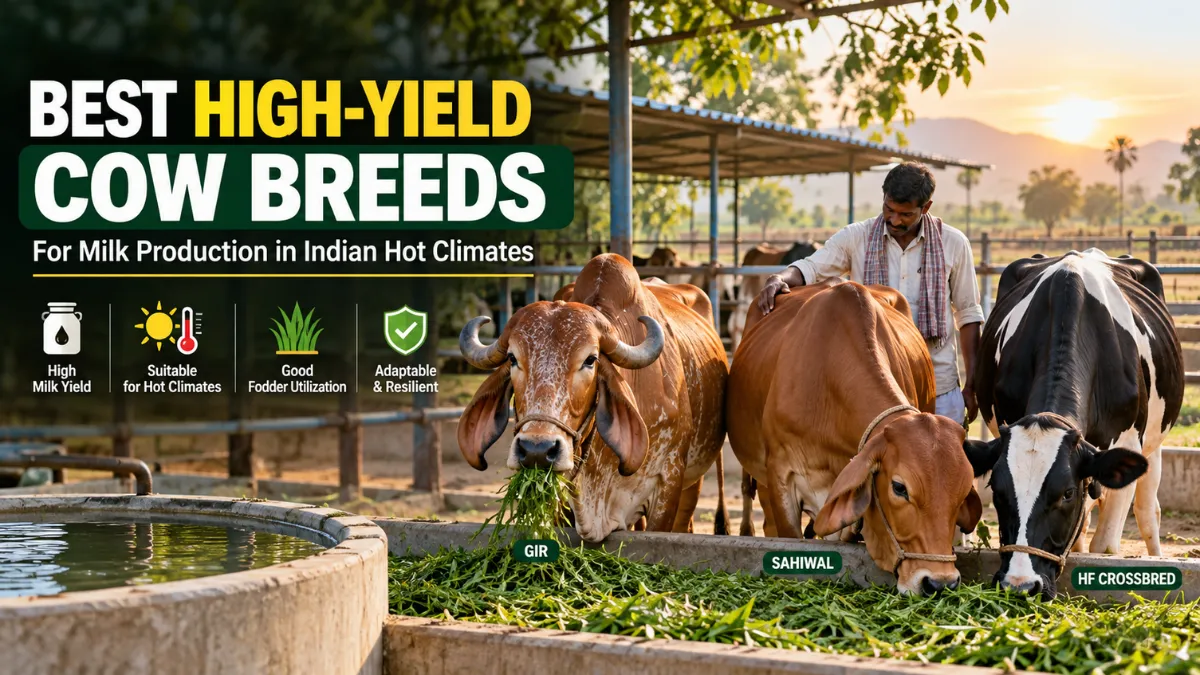
The best dairy cow for a hot Indian village is the one that can remain healthy and produce economically under that farm's conditions. The animal with the highest advertised daily yield is not automatically the right purchase.
Sahiwal, Gir, Rathi and Tharparkar are useful breeds to consider. Crossbred cows can also suit farms with dependable feed, water, health services and summer management. The choice should begin with available resources and verified animal records.
Why breed selection must include the farm
Before visiting a seller, assess how much green and dry fodder you can supply through summer. Check the water source, shade, ventilation, veterinary access and the buyer's milk pricing system.
NDDB's breeding guidance explicitly connects breed choice with resources, climate, feed, health services and the milk market. It also cautions against judging an animal by milk yield alone.
Ask nearby dairy farmers how their animals perform in the hottest months. A cow's performance in your district is more useful than an impressive video recorded under different feeding and housing conditions.
Four indigenous breeds worth comparing
| Breed | Indian breeding tract identified by NDDB | Why to include it in your shortlist |
|---|---|---|
| Sahiwal | Punjab and parts of Rajasthan | Established dairy breed; assess available animals with reliable records |
| Gir | Saurashtra districts of Gujarat | Established dairy breed with organised breeding activity |
| Rathi | Parts of Rajasthan, including Bikaner and Ganganagar | Relevant option when assessing cattle from hot, dry regions |
| Tharparkar | Parts of Rajasthan and Kutch in Gujarat | Useful breed to assess for dry-region dairy conditions |
These are options to investigate, not a guarantee that every animal of each breed will perform well on every farm.
Sahiwal
Sahiwal is a recognised indigenous dairy breed. NDDB lists an average milk-yield figure of 2,325 kg on its breed profile. Such breed-level reference figures do not tell you what one animal will produce each day at your farm.
Check the cow's full lactation history, recent calving date and current feeding requirement. Colour and appearance alone are not enough to establish pedigree or productive merit.
Gir
Gir has a strong dairy identity and an established breeding tract in Gujarat. NDDB's profile lists an average milk-yield figure of 2,110 kg. Individual performance varies considerably.
Do not assume a high purchase price will be recovered through a premium milk market. Confirm whether a buyer actually pays a separate rate, what documentation is required and how much milk that buyer will regularly purchase.
Rathi
Rathi is another indigenous dairy option, particularly worth discussing with breeding advisers when sourcing animals from Rajasthan. NDDB's reference profile lists an average milk yield of 1,560 kg.
A locally available, healthy animal with credible records can be a better business purchase than a distant animal bought at a large premium. Include transport stress, health checks and adaptation costs in the decision.
Tharparkar
Tharparkar is associated with dry western regions and is classified as a milk-and-draught breed in NDDB's breed listing. Its profile gives an average milk-yield figure of 1,749 kg.
Evaluate the specific cow's udder health, reproductive history and feeding needs. Regional adaptation does not remove the need for clean water, adequate nutrition or summer shelter.
Reading the figures correctly: The NDDB profile numbers above are breed reference milk-yield figures, not litres per day or a forecast for a new purchase. Do not divide them by 365 or multiply a seller's peak daily yield by 365 to calculate expected yearly sales. Lactation stage, dry periods and the individual animal's records matter.
Should you buy a Jersey or HF crossbred cow?
Crossbred cows should be considered against the farm's capacity to support them. A herd with good feeding, reliable water, cooling and veterinary support may justify a different choice from a farm facing seasonal fodder shortages.
Avoid a fixed rule that every crossbred is unsuitable for heat or every indigenous cow will be inexpensive to maintain. Crossbred performance depends partly on breed composition and management. Ask a qualified breeding adviser about the state breeding policy and local evidence.
Check the individual cow before paying
Arrange a veterinary examination and observe normal milking where possible. Review milk records over several days and, ideally, previous lactations. Ask about calving intervals, previous illnesses, mastitis and breeding history.
Confirm identification and ownership records. Clarify what feed the cow currently receives; a yield achieved on an expensive ration may not continue on cheaper farm fodder.
Budget beyond the purchase price. Include transport, insurance if chosen, housing, feed, breeding, veterinary care and the period when the cow is dry. Build your estimate around saleable milk after household use and any required withholding.
Summer care remains necessary for every breed
Provide shade, airflow and continuous access to clean drinking water. Keep resting areas dry and avoid unnecessary handling during the hottest hours. Ask the local veterinarian about a cooling arrangement suitable for the climate and shed.
Watch for unusual panting, poor intake and falling production. Heat can affect health and breeding as well as the milk sold that day. A breed decision cannot compensate for a badly designed shed or an unreliable water supply.