
Common Poultry Diseases and Safe Home Care for Rural Farmers
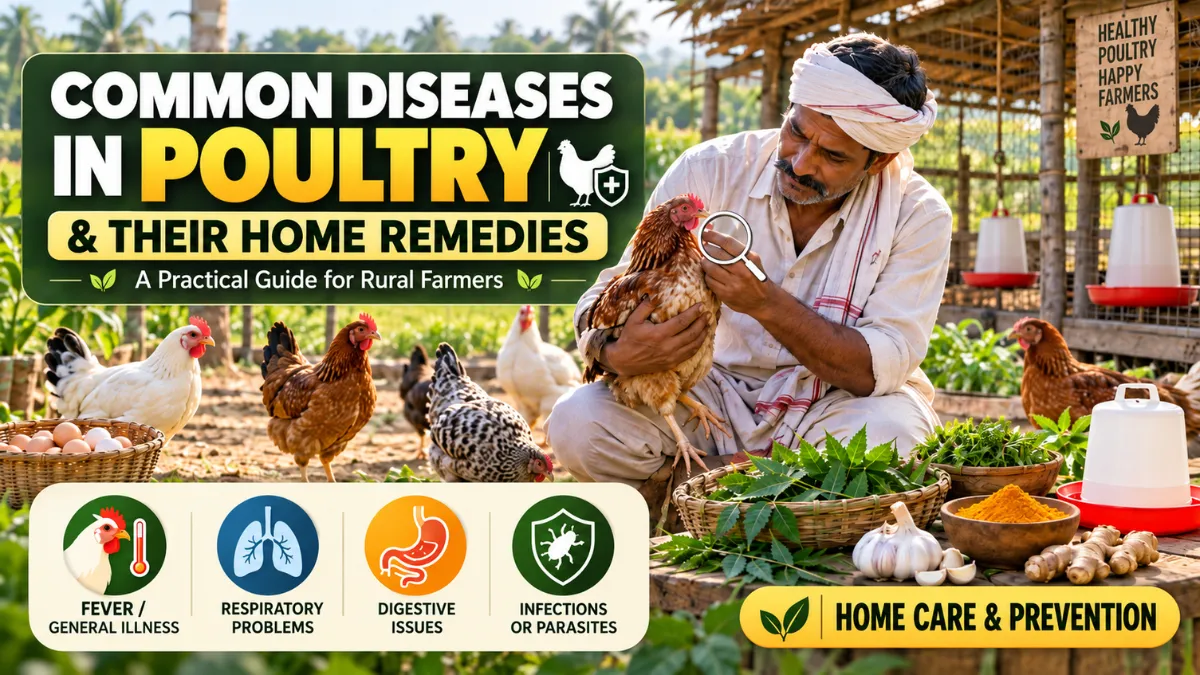
A hen that stops eating or a chick that sits away from the flock needs attention. Waiting for several birds to become sick can make a poultry problem much harder to control.
Rural farmers often search for home remedies for poultry diseases because veterinary help may be far away. Clean water, suitable shelter and good hygiene can support birds, but kitchen remedies cannot be relied on to cure infections such as Ranikhet disease or coccidiosis. Early diagnosis matters.
What to do when you notice a sick bird
Separate it from healthy birds where this can be done safely, using separate feeders and drinkers. Keep children and unnecessary visitors away. Attend to healthy birds before sick birds and clean your hands and footwear afterwards.
Provide easy access to clean drinking water and the usual appropriate feed. Keep the bird in a quiet, dry, well-ventilated place with temperature suitable for its age. A weak chick may need warmth, while a heat-stressed adult needs cooling and airflow.
Do not force water or medicine into a bird's beak. It can enter the airway. If the bird cannot drink, cannot stand or struggles to breathe, seek veterinary help urgently.
Common warning signs and what they may mean
These signs help you describe the problem to a veterinarian. They do not confirm a diagnosis.
| Problem | Signs that may occur | Appropriate next step |
|---|---|---|
| Ranikhet or Newcastle disease | Breathing problems, neck twisting, falling egg production or sudden deaths | Urgent veterinary assessment and movement control |
| Coccidiosis | Dullness, poor growth and diarrhoea, sometimes with blood | Prompt diagnosis and prescribed treatment |
| Fowl pox | Scab-like lesions on exposed skin; some birds develop mouth lesions | Veterinary advice, isolation and mosquito control |
| Respiratory infection or irritation | Sneezing, nasal discharge, swollen eyes or noisy breathing | Check ventilation and seek diagnosis |
| Worms or external parasites | Poor condition, irritation or reduced performance | Confirm the cause and use a suitable prescribed product |
| Heat stress | Panting, wings held away from the body and reduced feeding | Shade, airflow, cool clean water and urgent help if severe |
Several diseases produce similar signs. Green droppings, for example, are not enough to identify one particular infection.
Ranikhet disease needs prevention and rapid action
Ranikhet is a viral disease. Indian agricultural university guidance stresses vaccination, hygiene and measures that prevent infection entering or spreading through a flock. Turmeric, garlic or antibiotics do not cure the virus.
Contact the local veterinary service if birds develop neurological signs or sudden mortality. Do not sell or move apparently healthy birds from a flock with unexplained deaths while awaiting advice. A veterinarian can assess whether sampling and official disease-control measures are required.
Vaccination is preventive. It should follow a locally suitable programme; giving a vaccine after birds become sick is not a substitute for diagnosis.
Coccidiosis and diarrhoea need proper diagnosis
Wet litter and contaminated surroundings can contribute to disease problems. Remove wet bedding, repair leaking drinkers and keep feeders clean. Blood in droppings or rapidly weakening chicks needs prompt veterinary attention.
Diarrhoea can also have other causes. Do not choose a medicine simply from the colour of the droppings. Ask which birds require treatment, the correct product and duration, and whether eggs or meat must be withheld afterwards.
Which home-care measures are useful?
Useful home care means correcting basic management problems while arranging appropriate treatment.
Remove spoiled feed and provide a suitable fresh ration. Prevent wild birds and rodents from contaminating feed and water. Improve airflow without exposing young chicks to chilling draughts. During hot weather, avoid crowding and make drinking water easily accessible.
If a veterinarian recommends a poultry electrolyte product, follow the label and advice. Homemade salt mixtures can be incorrectly concentrated. Do not add disinfectants, kerosene, pesticides or human medicines to drinking water.
Keep a written record of any medicine used. Egg and meat withdrawal periods are product-specific, and some medicines are unsuitable for laying hens producing eggs for consumption.
When is the situation an emergency?
Seek help immediately for several sudden deaths, severe breathing difficulty, swollen or discoloured heads or combs, paralysis, or illness spreading quickly through the flock. These signs can have different causes, including infections requiring official investigation.
Indian animal-health authorities emphasise reporting unusual sickness and mortality. Avoid handling dead birds with bare hands or opening carcasses yourself. Keep people and animals away and follow the veterinary department's instructions for sampling and disposal. Do not eat or sell sick or dead birds.
Build a prevention routine for a backyard flock
Buy birds from a dependable source and obtain their vaccination history. Arrange separate observation of new birds before introduction, with the duration and checks advised by a veterinarian.
Have a written vaccination plan appropriate to the type and age of birds. Keep litter dry, clean equipment regularly and use disinfectants only at their labelled dilution and with the required precautions. Good hygiene does not mean spraying chemicals directly on birds.
Maintain a simple daily count of birds, deaths, feed use and egg production. A sudden change is easier to notice when yesterday's figures are written down.