
What Is Cold Storage? Temperature, Types, Facilities & How It Works
You work for months to grow a crop, yet part of it can spoil within days. Take tomatoes. A government-backed study found that 8.37% are lost on the farm. Another 3.25% are lost in markets. So, what is cold storage, and how can it help you keep more of what you grow? This guide covers how it works, the right temperature for each crop, and options for small farms.
What Is Cold Storage?
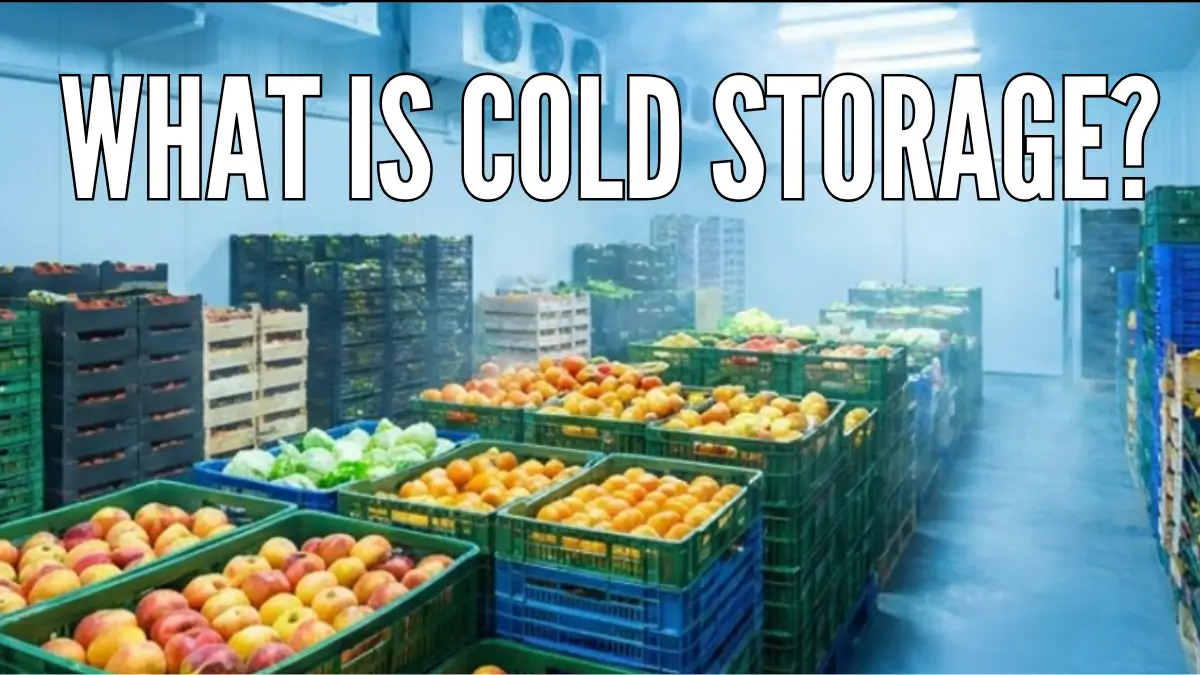
Cold storage is a large, insulated room or building that keeps farm produce cold. It holds fruits, vegetables, flowers and seed potatoes at a low, steady temperature. It also controls humidity. This slows ripening, rotting and drying, so your crop stays fresh much longer.
India already has a big network. As of 30 June 2025, the country had 8,815 cold storages. Together, they can hold 402.18 lakh tonnes of produce (PIB).
Cold Storage vs Refrigerator vs Godown
These three are often confused. Here is how they differ:
Home refrigerator | Cold storage | Godown (warehouse) | |
Size | A few hundred litres | Hundreds to thousands of tonnes | Large sheds |
What it controls | Temperature, roughly | Temperature and humidity, closely | Nothing; stays at room temperature |
How long it stores | Days | Weeks to months | Months or longer |
Best for | Household food | Fresh produce, seed, dairy | Dry grains, pulses, fertiliser |
Grains need dry, pest-free storage, not cold rooms. Our guide on grain storage risks and safe methods covers that.
Where Cold Storage Fits in the Cold Chain
The cold chain keeps produce cool all the way from farm to buyer. Cold storage is just one link:
Farm → pre-cooling → cold storage → refrigerated van → market
If one link breaks, the gain is lost. Crates left in the sun at the mandi can undo weeks of careful storage.
How Does a Cold Storage Facility Work?
A cold storage facility works on the same idea as your fridge, only much bigger. It pulls heat out of the room and sends it outside. Four parts do this job in a loop:
Evaporator: A cold liquid called refrigerant flows through coils inside the room. It soaks up heat and turns into gas.
Compressor: It squeezes the gas, which makes it hot.
Condenser: Sitting outside, it releases that heat into the open air. The gas turns back into liquid.
Expansion valve: It lowers the pressure. The liquid becomes very cold, and the loop starts again.
Other parts keep conditions steady:
Insulated walls: Thick PUF (polyurethane foam) panels keep outside heat out.
Fans: They spread cold air evenly around the stacks.
Humidifiers: They add moisture, so crops do not shrivel.
Ventilation: Crops breathe out carbon dioxide. Fresh air stops it from building up.
Sensors and controllers: They track temperature and humidity round the clock.
Your Crop's Journey Inside
Here is what happens to your produce from the day it arrives:
Sort: Remove cut, bruised and diseased pieces. One rotten potato can spread rot to the ones around it.
Cure or pre-cool: Cure potatoes before storage. NHB standards suggest 15–20°C and 90–95% humidity for 5–10 days. This heals small skin wounds. Most fruits and vegetables are pre-cooled instead.
Load: Chambers fill slowly. For potatoes, loading takes about three weeks, so the cooling system can keep up.
Hold: Your crop rests at its set temperature and humidity.
Unload: Ask the operator to warm produce up slowly before it leaves. A sudden jump makes water droplets form on the surface. Wet produce rots faster.
Right Cold Storage Temperature Setting for Each Crop
There is no single cold storage temperature. Each crop has its own sweet spot. Use this table as your starting point for common horticulture crops (Hindi):
Crop | Temperature (°C) | Relative humidity (%) |
Potato (seed) | 2 to 4 | 90–95 |
Potato (table use) | 3 to 5 | 90–95 |
Potato (chips and fries) | 10 to 12 | 90–95 |
Onion (dry) | 0 | 70–75 |
Apple | –1 to 3 | 90–98 |
Grapes | –1 to 1 | 85–90 |
Cabbage, cauliflower, carrot | 0 to 2 | 90–95 |
Mango (mature green) | 10 to 13 | 85–90 |
Tomato (mature green) | 12.5 to 15 | 85–90 |
Banana | 13 to 14 | 90–95 |
Sources: NHB and ICAR-CPRI (potato), TNAU Agritech, Cornell Cooperative Extension, UC Davis Postharvest Center, National Mango Board.
Why Colder Is Not Always Better
Some crops get hurt by too much cold. This is called chilling injury.
Banana: Below 13°C, the peel turns dull and smoky, and the fruit may never ripen.
Mango: Below about 10°C, mature green mangoes can get brown pulp and a weak aroma.
Tomato: Kept below 10°C for over two weeks, mature green tomatoes ripen with blotchy colour and poor flavour.
Chip potatoes: In very cold rooms, potato starch turns into sugar. Fried, that sugar makes chips dark and bitter.
Types of Cold Storage
The types of cold storage differ in size, design and purpose. Here are the ones you are most likely to use or see:
Bulk cold storage: Large chambers hold one crop at one temperature. Potato stores are the classic example.
Multi-commodity cold storage: Several smaller chambers run at different temperatures. One building can hold apples, grapes and onions at once.
Controlled atmosphere (CA) storage: Airtight rooms keep oxygen low and carbon dioxide high. This slows ripening even further. Apples and pomegranates keep far longer this way.
Pre-cooling units: They pull field heat out of freshly picked produce within hours.
Ripening chambers: They release a measured dose of ethylene gas. Bananas and mangoes ripen evenly and safely.
Walk-in or mini cold rooms: Small rooms built from insulated panels, holding a few tonnes. They can sit right at the farm gate or a collection centre.
Solar cold rooms: Small cold rooms powered by solar panels (Hindi). They help where power cuts are common.
Reefer vans and containers: Refrigerated trucks and containers. Think of them as cold storage on wheels.
Cold Storage Solutions for Small Farmers
You do not need to own a big cold store. Pick the cold storage solution that fits your crop and budget.
Small lots of vegetables, no electricity: build a Zero Energy Cool Chamber (ZECC). Scientists at IARI, Pusa, designed it. It is a double brick wall with sand packed in between, topped with a bamboo-and-straw cover. You keep the sand wet. As the water evaporates, the inside stays 10–15°C cooler than the outside air. Humidity stays around 95%. Produce kept inside lasts about twice as long as in the open.
Bulk potatoes: rent space in a nearby cold store. Rent is usually charged per bag or per quintal for the season. Compare rates at two or three stores before harvest.
A group of farmers or an FPO: share a mini or solar cold room. Sharing spreads the cost across members. Subsidies can cover a big part of it (see below).
Government Subsidies and Loans
These schemes help you build a cold room or a full cold storage facility:
NHB and MIDH subsidy: 35% of the project cost in general areas. 50% in North-Eastern, hilly and scheduled areas. It is linked to a bank loan and released after the unit is built.
PMKSY (Integrated Cold Chain): Grants for cold chain projects that link farms to markets. The Ministry of Food Processing Industries runs it.
Agriculture Infrastructure Fund (AIF): 3% interest help on loans up to ₹2 crore, for up to 7 years. A credit guarantee is also available.
UP potato help: In August 2026, Uttar Pradesh announced ₹100 per quintal for potatoes kept in cold storage.
Rules change often. Check with your district horticulture officer or bank before you apply. Planning a pre-cooling unit? Read our guide on pre-cooling unit subsidy (Hindi).
What Makes an Ideal Cold Storage?
Ideal cold storages have a few things in common. Check these points before you hand over your crop:
Steady settings: Temperature should stay within 1°C of the set point. Ask to see the temperature log.
Separate chambers: Apples and bananas give off ethylene gas, which makes carrots bitter. Ask which crops will share your chamber.
Power backup: Ask what runs the plant during a long power cut. A generator or solar backup is a must.
Clean and pest-free: Look for clean floors, crates and walls. Rats and fungus spread fast in a dirty store.
Honest paperwork: Watch the weighing yourself. Get a receipt with the date, weight and chamber number.
Insurance: Ask whether stored stock is insured, and against what.
WDRA registration: Want a loan against your stored crop? Only stores registered with the Warehousing Development and Regulatory Authority (WDRA) can issue e-NWRs. You can pledge these electronic receipts at a bank.
Benefits and Limitations of Cold Storage
Benefits
You choose when to sell. Prices often dip at harvest, when everyone sells. Stored produce can wait for a better rate.
Seed for next season. Seed potatoes stay firm and sprout-free until sowing.
Bigger buyers. Processors and exporters want a steady supply for months. Stored stock lets you meet it.
Limitations
Costs add up. Rent and transport eat into your profit.
Prices may stay flat. Some years, off-season rates barely rise.
Small weight loss. Crops still lose a little moisture over long periods.
Distance. The nearest cold store may be far from your village.
Make Cold Storage Work for You
Start with one crop and one season. Keep a simple notebook. Write down the date you store, the weight, the rent and that day's mandi price. When you take the crop out, note the new price. After two or three seasons, you will know which crops pay back the rent. For more ways to protect your harvest, read our complete guide to post-harvest storage.
FAQs
What is cold storage called in Hindi?
In Hindi, cold storage is called शीत भंडार (sheet bhandar) or शीत संग्रहागार (sheet sangrahagar). In daily talk, though, people usually say "कोल्ड स्टोरेज". If someone in your village asks, "What is cold storage?", just say: a शीत भंडार for crops.
What are the two main types of cold storage?
The two main types of cold storage are chilled and frozen. Chilled storage keeps fresh fruits and vegetables cool without freezing them. Frozen storage runs at –18°C or colder, for frozen peas, meat, fish and ice cream. Blast freezers go down to about –35°C to –40°C to freeze food fast.
What cold storage temperature does milk need?
Milk needs a cold storage temperature of about 4°C. Village collection centres use bulk milk coolers for this. NDDB specifications ask these coolers to chill fresh milk from 35°C to 4°C within 3 hours. At this temperature, bacteria grow very slowly.
Is a cold storage facility a profitable business?
A cold storage facility makes money only when its chambers stay full for most of the year. A store built for one crop, like potato, can stand empty for months after the stock goes out. Storing several crops across seasons keeps the chambers busy. Before you invest, study how much produce grows nearby and what rent farmers can pay.
How long do vegetables last in ideal cold storages?
In ideal cold storages, cabbage lasts 12–16 weeks and carrots 16–20 weeks. Dry onions keep for about 28 weeks. Cauliflower lasts just 3–4 weeks. Seed and table potatoes can stay stored for 5–10 months.