
Black Gram (Urad Dal) Cultivation: Seed Rate, Crop Duration, Flowering and Care
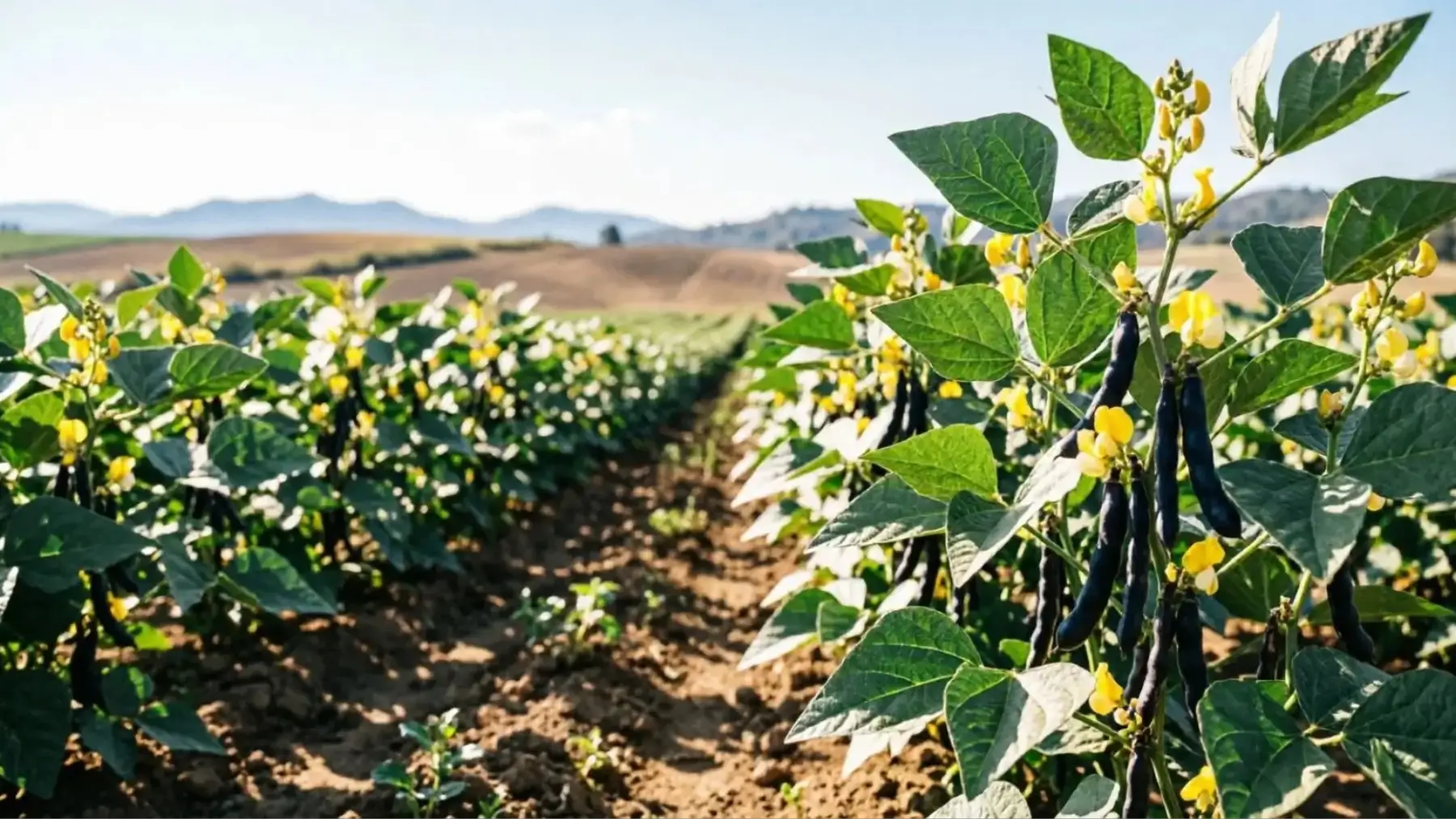
Black gram, also known as urad dal or urad, is an important pulse crop grown in different parts of India. It can be cultivated during both Kharif and other suitable seasons depending on the region and variety.
For farmers, successful black gram cultivation mainly depends on good-quality seed, timely sowing, proper moisture, weed control, and regular crop care.
In this guide, we cover the black gram seed rate, crop duration, flowering stage, suitable soil, sowing time, fertilizer, weed control and harvesting.
What Is Black Gram Cultivation?
Black gram is a short-duration pulse crop scientifically known as Vigna mungo. Its seeds are commonly used to prepare dal, idli, dosa, papad, and other food products.
The crop is suitable for many parts of India and can be grown in different seasons depending on the local climate.
Because black gram has a relatively short crop duration, it can also fit into crop rotations when planned properly.
Black Gram Crop Duration
The black gram crop duration is generally around 70 to 90 days, depending on the variety, season, weather and growing conditions.
Some early varieties can mature in a shorter period, while others may take longer.
A typical black gram crop develops through these stages:
Crop stage | Approximate period |
Germination | 3–7 days |
Vegetative growth | 10–30 days |
Flowering | Around 30–45 days |
Pod formation | Around 40–60 days |
Seed development | Around 55–75 days |
Harvesting | Around 70–90 days |
These timings are approximate and can vary according to the variety and growing conditions.
Best Time for Black Gram Sowing
The best sowing time depends on the season and location.
Black gram is commonly grown as a Kharif crop with the arrival of the monsoon. It can also be cultivated in suitable regions during other seasons when temperature and moisture conditions are favourable.
Farmers should avoid sowing when the field is waterlogged. The soil should have enough moisture for proper germination.
Before sowing, farmers should check the recommended sowing window for their area and selected variety.
Which Soil Is Best for Black Gram?
Black gram can grow in different types of soil, but well-drained loamy and sandy-loam soils are generally suitable.
The field should not remain waterlogged because excess water can affect root growth and crop development.
Before sowing:
Prepare a fine and level seedbed.
Remove existing weeds.
Ensure proper drainage.
Avoid fields where water remains standing for long periods.
Use a soil test when available to understand soil fertility.
Black Gram Seed Rate
The black gram seed rate depends on the variety, seed size, season and method of sowing.
For many cultivation conditions, farmers may use around 15–25 kg seed per hectare, but the recommended rate can vary.
It is better to follow the seed rate recommended for the particular variety and region rather than using extra seed.
Using too much seed can increase the cost and result in overcrowded plants.
How to Select Black Gram Seeds
Good-quality seed is important for getting a uniform crop.
While purchasing black gram seed, farmers should check:
Variety
Germination percentage
Seed quality
Seed purity
Recommended growing season
Suitability for the local area
Avoid damaged, shrivelled or discoloured seeds.
Good seed can help establish the crop more evenly and reduce the chances of having to fill gaps after germination.
Seed Treatment Before Sowing
Seed treatment can help protect the seed during the early stages and support better establishment.
Farmers should follow the seed-treatment recommendation for their variety and region.
Where recommended, biological inoculants such as Rhizobium can also be used according to the appropriate agricultural recommendation.
Always follow the recommended dose and treatment method instead of using more product than required.
Land Preparation for Black Gram
Black gram does not require unnecessarily expensive land preparation.
The main aim is to prepare a field where the seed can germinate properly and the roots can develop without obstruction.
Farmers can:
Plough or prepare the field as required.
Break large soil clods.
Level the field.
Remove existing weeds.
Make proper drainage arrangements.
Avoid excessive tillage if it does not provide a practical benefit, as unnecessary field operations increase cultivation costs.
Black Gram Flowering Stage
The black gram flower usually appears around 30 to 45 days after sowing, depending on the variety and growing conditions.
Black gram flowers are generally small and can be yellowish or yellow in colour.
Flowering is an important stage because the crop begins forming pods after flowering.
During this period, farmers should pay attention to:
Soil moisture
Pest activity
Disease symptoms
Weed competition
Overall plant growth
Sudden moisture stress during important reproductive stages can affect flowering and pod development.
How to Care for Black Gram During Flowering
The flowering stage requires regular crop observation.
Farmers should avoid unnecessary irrigation and ensure that the crop does not suffer from prolonged waterlogging.
At the same time, if the crop is grown under irrigated conditions and the soil becomes too dry, suitable irrigation may be required according to the local recommendation.
Farmers should also regularly check flowers and young pods for insect damage.
Fertilizer Management
Black gram requires nutrients for healthy growth, but fertilizer should be used according to the soil condition and local recommendation.
A soil test is useful for understanding the nutrient status of the field.
Farmers should avoid applying excessive fertilizer simply because they expect it to increase production.
The fertilizer recommendation can differ according to:
Soil type
Previous crop
Variety
Season
Local agricultural recommendation
Organic manure can also be used where it is available and suitable for the field.
Weed Control in Black Gram
Weeds compete with black gram plants for water, nutrients, sunlight and space.
Early weed control is therefore important.
Farmers can manage weeds through:
Timely intercultivation
Manual weeding
Proper row spacing
Keeping the field clean before sowing
Recommended herbicides when required
The exact weed-control method should depend on the weed problem and local recommendations.
Controlling weeds early is generally easier than waiting until they become well established.
Water Management
Black gram needs adequate moisture for germination and healthy growth, but it does not tolerate prolonged waterlogging well.
Farmers should make sure that excess rainwater can leave the field.
Good drainage is particularly important during heavy rainfall.
If the crop is irrigated, farmers should avoid unnecessary irrigation and follow the moisture requirements of the crop and local recommendations.
Pest and Disease Care
Black gram can be affected by different insects and diseases.
Farmers should regularly inspect the crop for:
Leaf damage
Insects
Yellowing
Leaf spots
Pod damage
Poor plant growth
Flower or pod dropping
Do not spray pesticides simply as a routine practice.
First identify the pest or disease and then use a locally recommended treatment at the correct dose.
When Is Black Gram Ready for Harvest?
Black gram is generally harvested when most of the pods have matured and changed colour.
The crop should not be left in the field for too long after maturity because mature pods can become dry and may split, resulting in seed loss.
Farmers should choose the harvesting time according to the variety, weather, and condition of the pods.
After harvesting, the crop is dried properly before threshing and storage.
Black Gram Harvesting Tips
A few simple practices can help reduce losses during harvesting:
Harvest when most pods are mature.
Avoid harvesting during wet conditions.
Handle dry pods carefully to reduce seed loss.
Dry the harvested crop properly.
Store clean and dry seeds in a suitable place.
Proper drying is especially important before long-term storage.
How to Reduce Black Gram Cultivation Costs
Small farmers can control cultivation costs by focusing on timely crop management.
Some practical ways include:
Use the recommended seed rate
Using excess seed increases the cost without necessarily improving the crop.
Control weeds early
Timely weed management can reduce competition and avoid more difficult weed-control operations later.
Avoid unnecessary sprays
Regular crop inspection can help farmers identify pest problems before deciding whether treatment is needed.
Use available farm resources
Farmyard manure and locally available resources can be useful where they are suitable and properly managed.
Avoid unnecessary field operations
Every additional tillage or cultivation operation adds labour and machinery costs. Use only the operations required for good crop establishment.
Black Gram Cultivation Calendar
A simple black gram crop calendar can look like this:
Activity | Approximate period |
Land preparation | Before sowing |
Sowing | According to local season |
Germination | 3–7 days |
Vegetative growth | 10–30 days |
Flowering | Around 30–45 days |
Pod formation | Around 40–60 days |
Seed development | Around 55–75 days |
Harvesting | Around 70–90 days |
Actual timing can vary depending on the variety, season, and weather.
Final Takeaway
Black gram is a relatively short-duration pulse crop that can be suitable for farmers looking for a crop that matures within a few months.
For successful black gram cultivation, focus on good-quality seed, timely sowing, proper drainage, early weed control, and regular monitoring.
The black gram crop duration is generally around 70–90 days, while flowering usually starts around 30–45 days after sowing. However, these timings can change depending on the variety, season, and local growing conditions.
For the best results, farmers should follow the variety-specific recommendations provided by their local agriculture department or agricultural university.