
Low-Cost Soybean Cultivation Techniques for Small Farmers
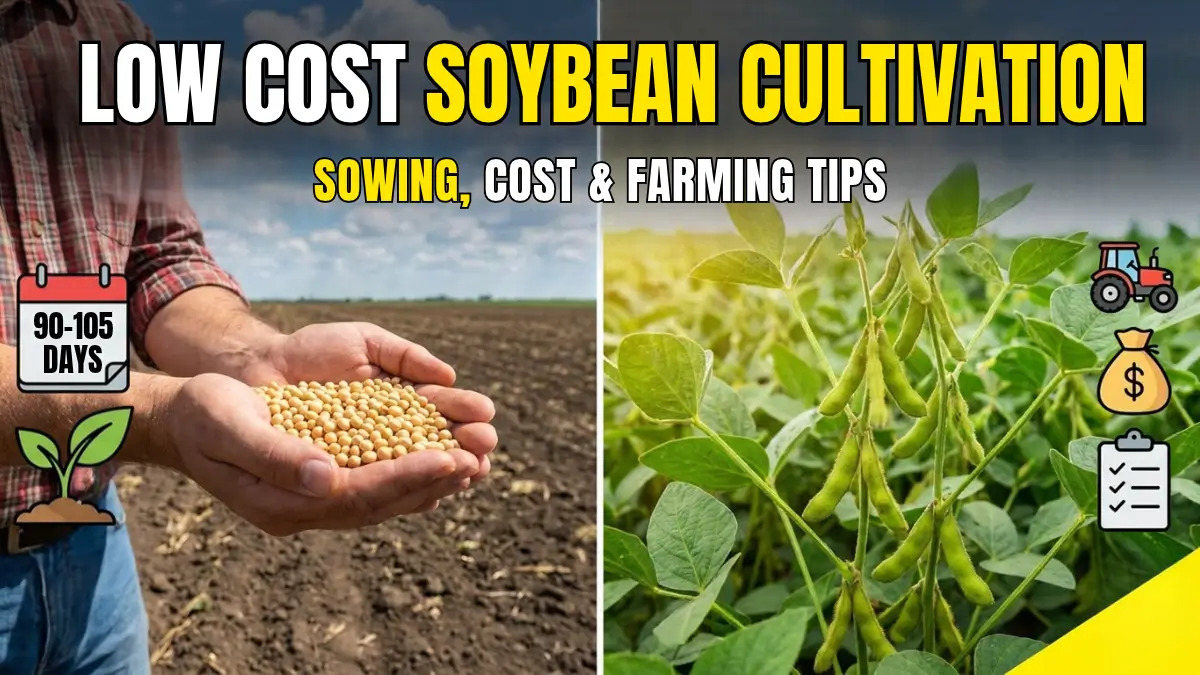
Soybean is mainly grown as a Kharif crop in India. It is an important oilseed crop and is widely cultivated in states such as Madhya Pradesh, Maharashtra, Rajasthan, Karnataka, and Gujarat.
For farmers, soybean cultivation is not very complicated, but timely sowing, good seed, proper weed control, and suitable soil moisture are important for getting a healthy crop.
In this guide, we explain soybean farming in simple terms, including crop duration, sowing time, seed requirements, soil, fertilizer, weed control, and harvesting.
What Is Soybean Cultivation?
Soybean cultivation means growing soybean plants for their seeds. The seeds are mainly used to make soybean oil, soybean meal, and other food products.
Soybean is generally grown during the rainy season. The crop needs good moisture for germination and early growth, but standing water in the field can damage the plants.
For this reason, farmers should choose a field with good drainage and sow the crop when there is enough moisture in the soil.
Soybean Crop Duration
The soybean crop duration is usually around 90 to 105 days.
However, the exact duration can change depending on the soybean variety, weather, sowing time and growing conditions.
A simple soybean crop cycle looks like this:
Stage | Approximate time |
Seed germination | 5–10 days |
Plant growth | 10–40 days |
Flowering | 35–55 days |
Pod formation | 50–75 days |
Seed filling | 70–95 days |
Harvesting | Around 90–105 days |
Early-maturing varieties can be ready sooner, while some varieties may take more than 100 days.
Best Time for Soybean Sowing
Soybean is mainly sown during the Kharif season, after the arrival of the monsoon.
The best sowing time depends on the state and local rainfall. Farmers should avoid sowing in completely dry soil. At the same time, the field should not have standing water.
A good approach is to sow when the soil has enough moisture to support germination.
Which Soil Is Best for Soybean?
Soybean grows well in fertile and well-drained soil.
Medium to deep soils with good moisture-holding capacity are generally suitable for the crop.
Before sowing, farmers should make sure that:
The field has good drainage.
There is no prolonged waterlogging.
The soil is properly prepared.
Large soil clods are broken.
The field is reasonably level.
A soil test can also help farmers understand the nutrient condition of their field before applying fertilizer.
How to Select Soybean Seed
Good-quality seed is one of the most important parts of soybean agriculture.
Farmers should select a variety that is recommended for their area instead of choosing a variety only because it performed well somewhere else.
While buying seed, check:
Seed quality
Germination percentage
Variety name
Recommended growing area
Seed size
Seed treatment requirements
Using poor-quality seed can result in uneven germination and a weak crop stand.
Soybean Seed Rate
The amount of seed required depends on the variety, seed size and germination percentage.
Farmers should follow the recommended seed rate for their variety rather than using extra seed.
Using too much seed increases the cost and can also result in overcrowding. Proper spacing helps the plants get enough sunlight, air, and nutrients.
Land Preparation for Soybean
Soybean does not require unnecessarily complicated land preparation.
The basic aim is to prepare a good seedbed where the seeds can germinate properly.
Farmers can:
Prepare the field after suitable rainfall.
Break large soil clods.
Level the field where required.
Remove existing weeds.
Make sure excess rainwater can drain away.
If the field has a regular waterlogging problem, proper drainage should be planned before sowing.
How to Reduce the Cost of Soybean Cultivation
Small farmers can control soybean cultivation costs by avoiding unnecessary inputs.
Some simple ways include:
Use the right amount of seed
Do not increase the seed rate unnecessarily. Use the recommended rate for the selected variety.
Avoid unnecessary fertilizer
More fertilizer does not always mean more production. Apply nutrients according to the soil condition and local recommendation.
Control weeds on time
Weeds compete with soybean plants for water, nutrients and sunlight. Controlling them early can save labour and prevent them from becoming difficult to manage later.
Use machinery carefully
Farmers who do not own expensive machinery can consider renting or using custom-hiring services instead of purchasing equipment for a single crop.
Do not spray pesticides without checking the crop
Regularly inspect the field for insects and diseases. Use a recommended treatment only when there is a genuine problem.
Fertilizer Management in Soybean
Soybean needs nutrients for healthy growth, but fertilizer should not be applied blindly.
The fertilizer requirement depends on the soil and local recommendation. A soil test can help farmers understand which nutrients are required.
Farmers should avoid the common mistake of thinking that applying more fertilizer will automatically increase the yield.
Use the recommended dose and method for the selected fertilizer.
Weed Management in Soybean
Weed control is especially important during the early growth of soybean.
Weeds take away water, nutrients and sunlight from the crop.
Farmers can manage weeds through:
Timely intercultivation
Manual weeding where practical
Proper row spacing
Pre-sowing weed management
Recommended herbicides when required
The important thing is timing. Waiting too long can make weed control more difficult and expensive.
Water Management
Soybean needs adequate soil moisture, especially during germination and important growth stages.
However, soybean does not perform well when water remains standing in the field for a long time.
Farmers should therefore:
Avoid sowing in waterlogged fields.
Maintain proper drainage.
Remove excess rainwater when required.
Monitor soil moisture during dry periods.
Good drainage becomes especially important during heavy monsoon rainfall.
Pest and Disease Management
Soybean can be affected by different insects and diseases during the growing season.
Instead of spraying pesticides regularly, farmers should inspect the crop and look for signs such as:
Damaged leaves
Caterpillars or other insects
Yellowing plants
Leaf spots
Pod damage
Poor plant growth
If a problem is found, identify it correctly and use the treatment recommended for that particular pest or disease.
When Is Soybean Ready for Harvest?
Soybeans are generally ready for harvesting when the plants reach maturity, and the pods and seeds have developed properly.
As the crop matures, the leaves start turning yellow and falling, while the pods change colour.
Farmers should avoid harvesting too early because the seeds may contain excess moisture. Delaying harvest for too long can also increase the risk of pod shattering and seed loss.
The exact harvesting time depends on the variety and weather conditions.
Soybean Cultivation Calendar
A simple soybean farming calendar can look like this:
Work | Approximate time |
Field preparation | Before sowing |
Sowing | With suitable monsoon moisture |
Germination | 5–10 days |
Weed management | Early crop stage |
Flowering | Around 35–55 days |
Pod formation | Around 50–75 days |
Crop maturity | Around 90–105 days |
Harvesting | After maturity |
The timing can vary according to the variety and local weather.
Final Takeaway
Successful soybean cultivation mainly depends on good seed, timely sowing, proper soil moisture, weed control, and regular crop monitoring.
For small farmers, keeping the cost under control does not mean cutting every input. It means using the right input at the right time and avoiding unnecessary expenses.
Before starting soybean farming, farmers should also check the variety and cultivation recommendations followed in their particular state or region.