
5 Bio-Insecticides for Vegetable Farming in India: Neem, Bt and More
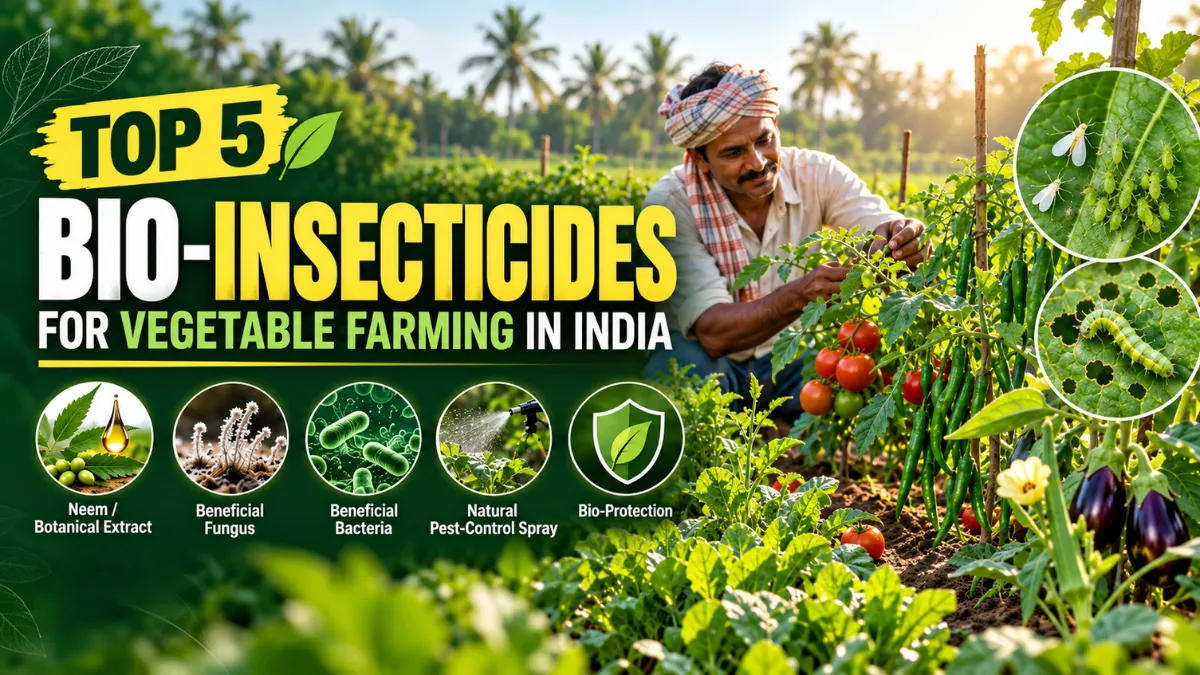
A bio-insecticide can be useful in vegetable farming when it matches the pest present in the field. But one product cannot control every caterpillar, whitefly, aphid and disease found in tomato, bhindi, brinjal or cabbage.
Start with identification. Then check whether the product is approved for your crop and pest, whether it is still within its expiry date and how it should be applied. These checks matter as much as the name printed on the packet.
First, Understand Where Trichoderma Fits
Trichoderma is mainly used against certain plant diseases, especially soil-borne diseases. It is a biological crop-protection agent, but it should not be listed as a direct replacement for an insecticide against aphids or caterpillars.
TNAU distinguishes insect-pathogenic organisms from disease-management agents such as Trichoderma. Therefore, the five options below focus on insect management. They are useful categories to understand, not a ranking of commercial brands.
Quick Comparison
| Bio-insecticide option | Main role to understand | Important limitation |
|---|---|---|
| Neem/azadirachtin products | Discourage feeding and affect insect development | Formulations differ in strength and performance |
| Bt, especially suitable kurstaki products | Target susceptible caterpillars | Not a general aphid or whitefly treatment |
| Beauveria bassiana | An insect-pathogenic fungus | Strain, quality, weather and target pest matter |
| Lecanicillium products | Biological management of certain sucking pests | Crop-pest approval must be checked |
| HaNPV | Targets Helicoverpa armigera larvae | Does not replace an NPV intended for another insect |
1. Neem-Based Insecticides
Many Indian farmers are familiar with neem products. Their effects can include reduced feeding and disruption of insect growth. They do not always produce the quick visible knockdown expected from some synthetic insecticides.
Read the active ingredient and concentration. A neem oil product and an azadirachtin formulation labelled in ppm are not automatically equivalent. Use the quantity and application method stated for the product, crop and pest.
Assess fresh damage and pest activity rather than deciding that the spray failed because insects did not immediately fall from the plant.
2. Bacillus thuringiensis, or Bt
Bt is a bacterium used in biological insecticides. Suitable Bt products can target caterpillars when they feed on treated plant material. The strain and product determine the target range.
For a vegetable grower, the practical question is whether the pest is a susceptible caterpillar and whether treatment can reach its feeding surface. It is easier to plan suitable control before larvae are protected inside fruits or other plant parts.
Do not buy Bt expecting it to control all sucking insects. Check the label and apply at the advised pest stage.
3. Beauveria bassiana
Beauveria is a fungus that can infect insects. ICAR-NBAIR has worked on formulations of Beauveria and other insect-pathogenic fungi for sucking pests in vegetables.
A packet contains a living biological product, so storage and expiry matter. Avoid buying damaged packs or products kept in poor conditions. Follow the stated storage instructions and do not assume that every strain or formulation has identical uses.
Do not mix it with a fungicide unless compatibility is established for that combination. A fungicide intended to kill fungi may interfere with a beneficial fungal product.
4. Lecanicillium Products
Lecanicillium is another fungal option studied for sucking-pest management. Some older references use the name Verticillium lecanii. Use the identity and directions on the registered product rather than treating all similarly named packets as interchangeable.
ICAR's Annual Report 2022–23 describes a brinjal trial involving azadirachtin and Lecanicillium that reduced several sucking pests under the study conditions. This supports further use within a suitable programme; it is not a direction to mix any neem and fungal products in any proportion.
5. HaNPV
HaNPV is a virus-based product directed at Helicoverpa armigera, commonly called the gram pod borer or tomato fruit borer depending on the crop. ICAR-IIHR includes HaNPV in its tomato pest-management guidance.
The name of the target insect is essential. HaNPV is not interchangeable with SlNPV, which targets Spodoptera litura, or a product developed for fall armyworm.
Use the correct product while larvae are at the advised stage and follow its application instructions. A generic bottle labelled only as “virus pesticide” is not enough information for selection.
Before Buying Any Bio-Insecticide
Check the registration and crop-pest claim, organism or active ingredient, formulation, batch number, expiry date, and storage requirements. Buy from a reliable supplier and keep the bill.
For certified organic vegetables, confirm that the specific input is permitted by your certification system. Follow any harvest and re-entry instructions; biological origin does not mean there are no precautions.