
How to Control Aphids in Mustard Crops: Organic and Chemical Solutions
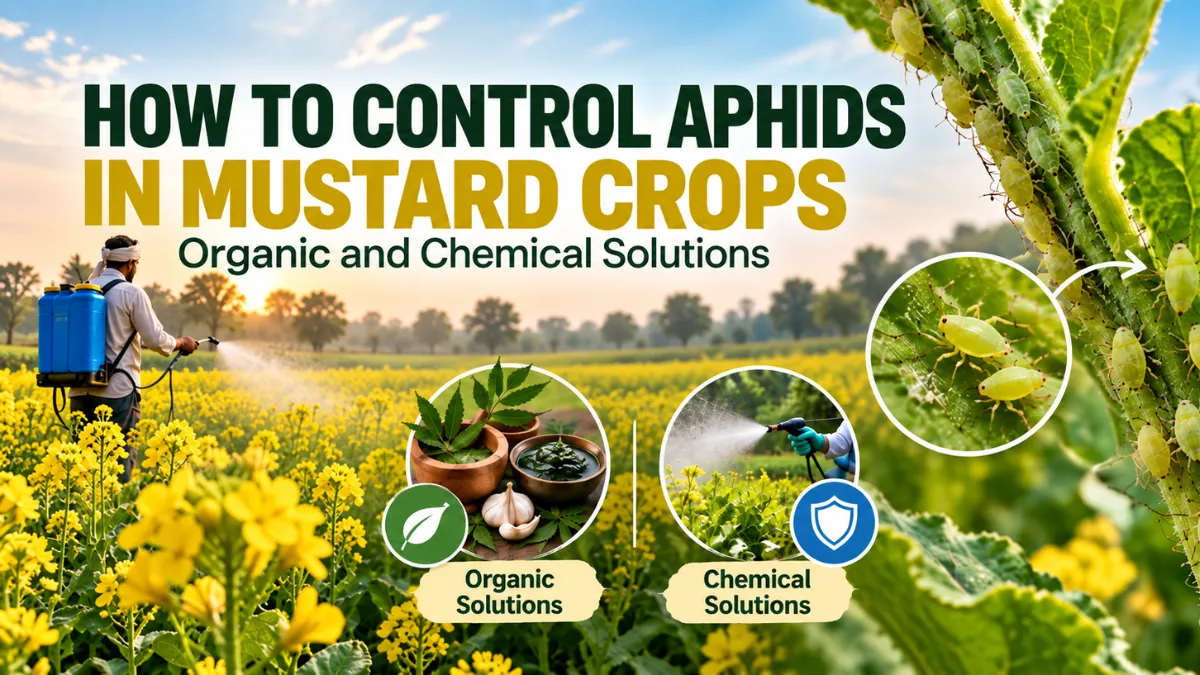
Small greenish insects crowded on the top shoots of mustard are often mustard aphids. They suck plant sap and can damage tender growth, flowers, and developing pods. When the attack increases, shoots may look weak, and leaves can become sticky or curled.
The right response is to check how much of the field is affected, protect useful insects and choose a suitable treatment when needed. Spraying simply because a neighbouring farmer has sprayed can add cost without solving your own field's problem.
How to Identify Mustard Aphids
The main mustard aphid is Lipaphis erysimi. Look closely at tender shoots, flower clusters and young pods. Aphids are small, soft-bodied insects and usually occur in groups.
Tamil Nadu Agricultural University describes sap sucking, leaf curling and honeydew as important signs. Honeydew is the sticky material left by aphids. Black sooty mould may grow on it, making affected parts look dirty.
Yellowing alone does not confirm an aphid attack. Check for insects before choosing an insecticide, because nutrient problems, diseases and other pests can also weaken a crop.
Check Several Parts of the Field
Walk through the field rather than inspecting only the plants beside the road. Check the top shoots at several places and note whether colonies are small and scattered or spreading across the crop.
Also look for ladybird beetles, their larvae, and other aphid-feeding insects. These natural enemies can help limit the population. Ask your local Krishi Vigyan Kendra, or KVK, for the action threshold used for your crop stage and area.
A useful record is simple: date, crop stage, plants checked, aphid colonies seen, and beneficial insects present. Repeat the same method at the next visit so you can see whether the attack is increasing.
Organic and Non-Chemical Options
Where only a few shoots are heavily infested, carefully removing those affected portions may help reduce an early localised infestation. Avoid unnecessary pruning across a flowering crop.
Protect natural enemies by avoiding routine broad-spectrum sprays. Follow the locally recommended sowing window and balanced fertiliser use as part of the crop's overall pest-management plan.
Neem-based products may be considered where their label and local guidance cover the crop and pest. Buy a known formulation and follow its directions. Neem oil, neem seed kernel extract, and azadirachtin concentrates are different products; their quantities cannot be exchanged spoon for spoon.
On a certified organic farm, check the permitted-input rules before use. A product being plant-based does not automatically make every commercial formulation acceptable under organic certification.
What Does Indian Research Show?
ICAR-NRIIPM reports testing mustard pest-management packages in Delhi and Rajasthan, followed by farmer-participatory work in other mustard-growing areas. The approach combines crop management, biological methods and need-based chemical control.
The useful lesson is that mustard protection works as a programme. It is not just the choice of one bottle. The same institute's work includes Trichoderma for disease-related parts of the package; that should not be mistaken for evidence that Trichoderma directly controls aphids.
An ICAR Research Complex study at Umiam also compared plant extracts against mustard aphids. Results differed between treatments. Such a trial does not prove that every homemade plant extract will give the same control on another farm.
When Is Chemical Control Needed?
Consider a suitable registered insecticide when the locally advised action threshold is reached or the infestation is increasing enough to threaten the crop. Thiamethoxam 25% WG is one formulation listed for mustard aphids in the official major-use reference and a current manufacturer product table.
Before buying, confirm the exact product's mustard-aphid label claim, dose, spray-water requirement and waiting period. Do not copy a dose for another crop or another formulation of the same ingredient.
Mustard flowers attract bees. Follow the product's bee-protection and flowering restrictions. Spraying late in the day does not make a product safe if its label prohibits the proposed use during flowering.
Use the specified protective equipment and avoid drift onto neighbouring crops, water sources or people. Keep the invoice and record the spray date.
What Should You Check After Treatment?
Look for live colonies and fresh damage after the product's expected assessment period. Old curled leaves may remain curled even when the pest is controlled.
If control is poor, check identification, application coverage, weather and product quality before repeating a spray. Repeatedly changing brand names may still mean using the same active ingredient or mode of action.