
How Unseasonal Rain Affects Rabi Crops in Central India
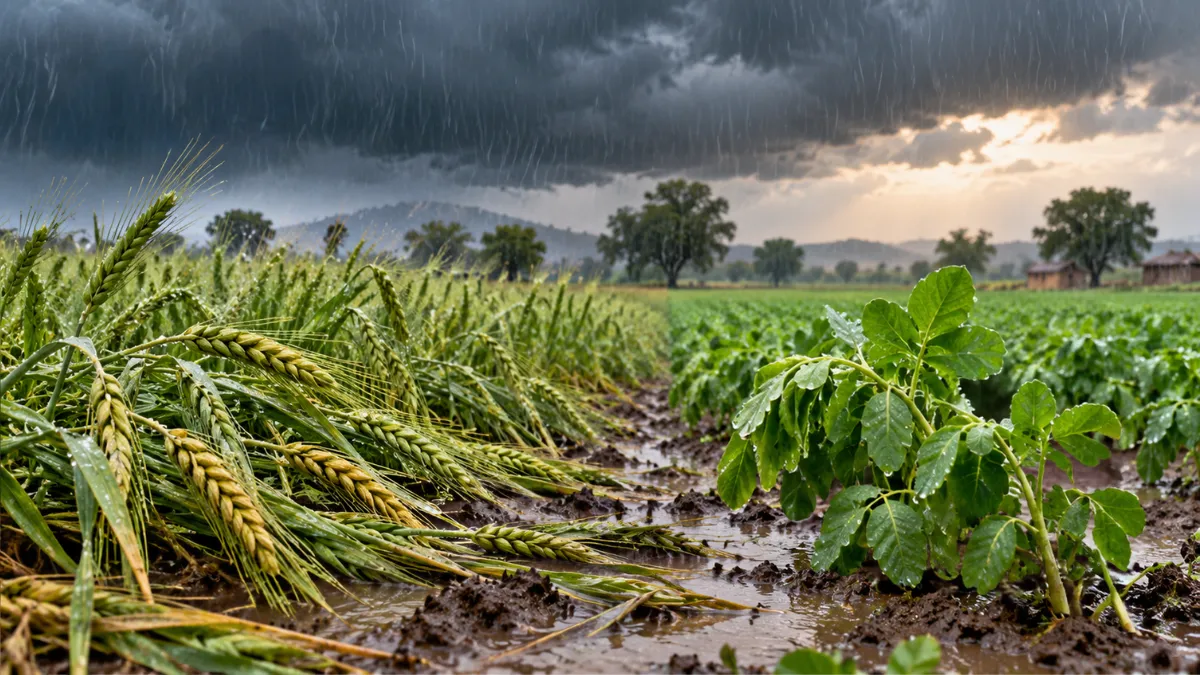
Unseasonal rain can affect wheat, gram and mustard differently. A growing crop may benefit from useful soil moisture, while a mature crop exposed to rain, strong wind or hail can suffer damage and quality loss. The crop stage and field condition matter as much as the rainfall amount.
This article is a seasonal preparedness guide, not a live weather alert. Published in September, it should not be read as a report that standing rabi crops across Central India are currently damaged. Farmers should use the latest district-level IMD forecast for decisions on their own fields.
Why the crop stage matters
A forecast saying “rain likely” is only the starting point. Check whether the field is awaiting sowing, carrying a growing crop or ready for harvest.
| Crop situation | Main concern to assess |
|---|---|
| Land being prepared for sowing | Whether the soil is too wet for field operations |
| Growing wheat | Standing water and lodging risk if rain comes with wind |
| Flowering or pod-forming gram | Excess moisture and crop-health problems |
| Mature mustard | Exposure of ready pods and harvested material to weather |
| Cut crop lying in the field | Wetting, delayed drying and quality loss |
| Produce ready for storage | Whether it is sufficiently dry for safe storage |
This is a risk checklist, not a forecast of losses. The same rain event can have different effects in two nearby fields because of drainage, soil, crop stage and previous irrigation.
Where to check an IMD warning
Use IMD’s district weather warnings and district agromet advisories. MausamGram can also help you look up forecasts for a location. Read the issue date, validity period and district name before forwarding a screenshot.
A district warning tells you about the weather hazard. An agromet bulletin adds crop-related advice. When the bulletin is available in your preferred language, read the full crop entry rather than only the rainfall symbol.
For Madhya Pradesh, Vidarbha and nearby parts of Central India, use the bulletin covering the actual farm location. A warning for one part of a large state is not automatically a warning for every district.
Before rain reaches the farm
Check drainage outlets and remove obstructions where this can be done safely. Keep harvesting sheets, bags and a dry storage space ready. Move bagged grain away from locations where runoff can enter.
Review planned irrigation using the forecast and existing soil moisture. Avoid automatically irrigating a wet field because the previous schedule says it is due. Similarly, check the suitability of any planned spray against the product label and the local advisory when rain or strong wind is expected.
Harvesting decisions need particular care. Do not cut an immature crop simply because a forwarded message predicts rain. If the crop is mature, discuss the available harvest window with the local KVK or agriculture officer and arrange labour or machinery accordingly.
After rain stops
Inspect the field when it is safe to enter. Look for ponding, flattened plants and wet harvested material. Record the affected locations and take dated photographs if damage has occurred.
Keep wet produce separate from dry produce. Check moisture before bagging and storage rather than judging only by the surface appearance. A dry-looking outer layer does not establish that the entire lot is ready to store.
Avoid driving heavy machinery into soil that cannot support it. The need to finish harvesting quickly must be balanced against getting machinery stuck or damaging the field.
If unusual symptoms develop, show clear photographs and samples, where advised, to a qualified crop adviser. Rain by itself is not a reason to apply a pesticide mixture.
What Indian evidence tells us
A study published in IMD’s MAUSAM journal assessed agromet advisories for wheat at PAU’s Krishi Vigyan Kendra in Jalandhar during rabi 2020–21. It reported economic benefits from management guided by the advisories. This supports using local forecast-based advice, but the results are not a prediction of savings for every Central Indian farm.
Past IMD advisories have also recommended protecting harvested produce and adjusting harvesting or drainage in response to weather. Those older bulletins illustrate the approach; their dates must not be reused as today’s warning.
If you need to report crop damage
Keep photographs, crop details, sowing information and relevant insurance documents ready. Contact your insurer or local agriculture office promptly to ask whether the event and crop are covered and what reporting deadline applies. Insurance and government relief are separate processes, and neither payment should be assumed from a news headline.