
How to Store Onions and Garlic at Home: Reduce Sprouting and Rot
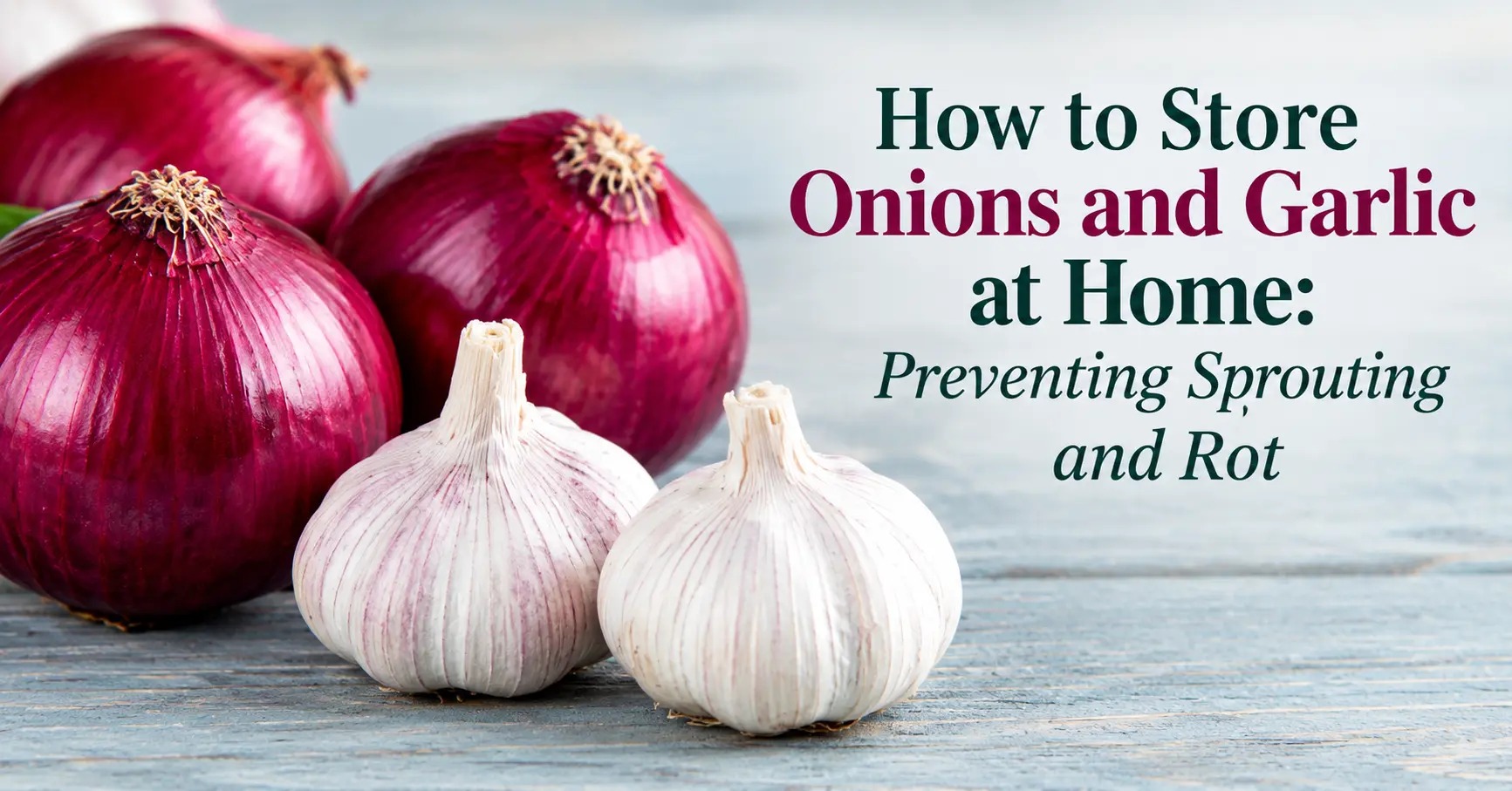
Whole, dry onions and garlic keep best when their storage area is dry and well-ventilated. Leaving them in a tightly tied shopping bag, beside a wet sink or in a deep, crowded pile makes it harder to keep the bulbs in good condition.
The first step is to separate whole, sound bulbs from damaged, peeled, or cut produce. They need different handling. A basket of dry onions cannot be managed in the same way as half an onion left after cooking.
Sort Bulbs Before Putting Them Away
Choose firm bulbs with dry outer skins. Put bruised or damaged bulbs aside for prompt use if they remain sound. Discard bulbs that are rotten, slimy or mouldy.
Check the bottom of a purchased sack as well as the top. A few spoiled bulbs hidden underneath can be missed when the entire sack is pushed into a kitchen corner.
For a home garden harvest, inspect bulbs individually before combining them into a storage lot. Removing loose soil gently is preferable to washing produce that you intend to store dry.
Cure Freshly Harvested Onions and Garlic
Curing allows the outer layers and neck to dry before storage. University of Minnesota Extension advises drying onions before storing them and describes curing garlic in a warm, dry, airy location for around three to four weeks. Actual progress depends on the crop and conditions.
Protect the harvest from rain and provide space for air movement. Do not assume curing is complete simply because a fixed number of days has passed. Damp necks and incompletely dried outer layers need attention.
Market-bought bulbs may already be cured. In that case, focus on sorting and storage rather than treating them like a fresh harvest.
How to Store Whole Onions
Use a mesh bag, ventilated basket or shallow crate. Choose a dry location away from direct sunlight, stove heat and water splashes. Avoid packing the container so tightly that bulbs in the middle cannot be inspected.
A useful household arrangement is to divide onions into two batches: a small quantity for current cooking and a reserve kept in a suitable storage spot. Use older sound bulbs first.
Extension guidance recommends a cool, dry storage area. In an Indian kitchen during hot or humid weather, those conditions may be difficult to maintain. Buying smaller quantities is often more practical than expecting one large purchase to last for months.
How to Store Garlic
Keep sound garlic bulbs whole until needed, with their protective skins in place. Store them in a dry, ventilated container and inspect them when taking out a bulb for cooking.
Do not promise yourself a fixed shelf life based only on appearance at purchase. Variety, maturity, previous handling and the conditions inside your home all influence how long garlic stays usable.
Peeled garlic and cut onions need refrigerated handling. Put them in a clean, covered food container and use them promptly. They do not belong back in the dry bulb basket.
Common Storage Problems
| Problem | What to check | Practical response |
|---|---|---|
| Wet or soft bulbs | Moisture, existing decay and crowding | Discard spoiled bulbs; clean and dry the container |
| Sprouting | Time in storage and storage conditions | Use sound stock promptly and reduce the next purchase |
| Shrivelling | Age and moisture loss | Buy quantities you can use sooner |
| Repeated spoilage at the bottom | Hidden damaged bulbs or poor air movement | Use shallower containers and inspect the full lot |
These observations help you improve storage, but they do not identify every disease. Farmers facing repeated crop-level losses should seek local horticultural advice.